
Mastering the 98%: Essential Performance Basics for Pre-Season Heat
With a red-weather warning in the UK, extra care is needed.

I’ve had athletes training in 34°C heat this week. Humidity was 80%(!!) in Willand last night. These ladies found it tough.

Here’s what the research actually says about keeping them safe and performing (football-based, but it applies to other sports too).
With pre-season training coinciding with extreme heat across the UK, players are currently facing a double-edged sword: the highest physical training loads of the year and environment-induced (heat) stress. While it is tempting to look for the “elite 2%” of performance—the complex supplements and advanced recovery tech—the reality is that most players leave 98% of their performance on the table by neglecting the basics.
Based on the Portuguese Football Federation consensus and recent research, here is your blueprint for mastering the heat this week.
1. The Hydration Logic: Beyond Thirst
In temperatures reaching 37°C, sweat rates in professional players can soar to 1.46 litres per hour. Relying on thirst is a dangerous strategy because the sensation of thirst often lags significantly behind actual fluid needs.
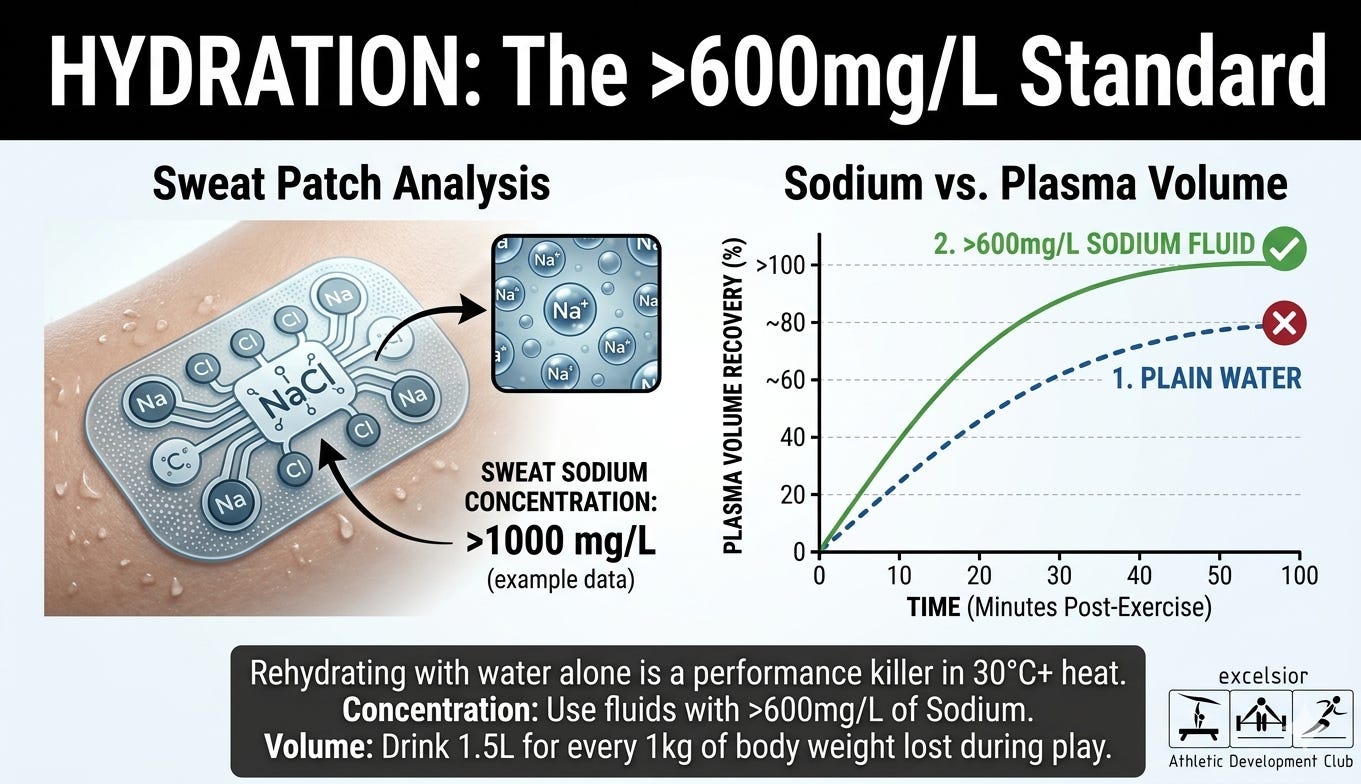
The Science: Dehydration doesn’t just slow you down physically; it compromises mental concentration and skill performance after only 45 minutes of play. Furthermore, rehydrating with plain water alone can take three times longer to restore your plasma volume than using a sodium-rich beverage.
The Player Protocol (using 70kg as an average weight):
· Pre-Hydration: Drink 350–490 mL (one standard sports bottle) of a drink containing at least 600mg of sodium per litre roughly 2–3 hours before training.
· The Recovery Rule: For every 1kg of weight lost during the session, you must consume 1.5L of fluid within the next 2–4 hours to restore balance.
2. The Fueling Blueprint: Real Food Examples
To sustain high-intensity blocks in the heat, your energy baseline is approximately 3566 kcal per day. If you don’t start with “full tanks,” you are essentially training on empty.
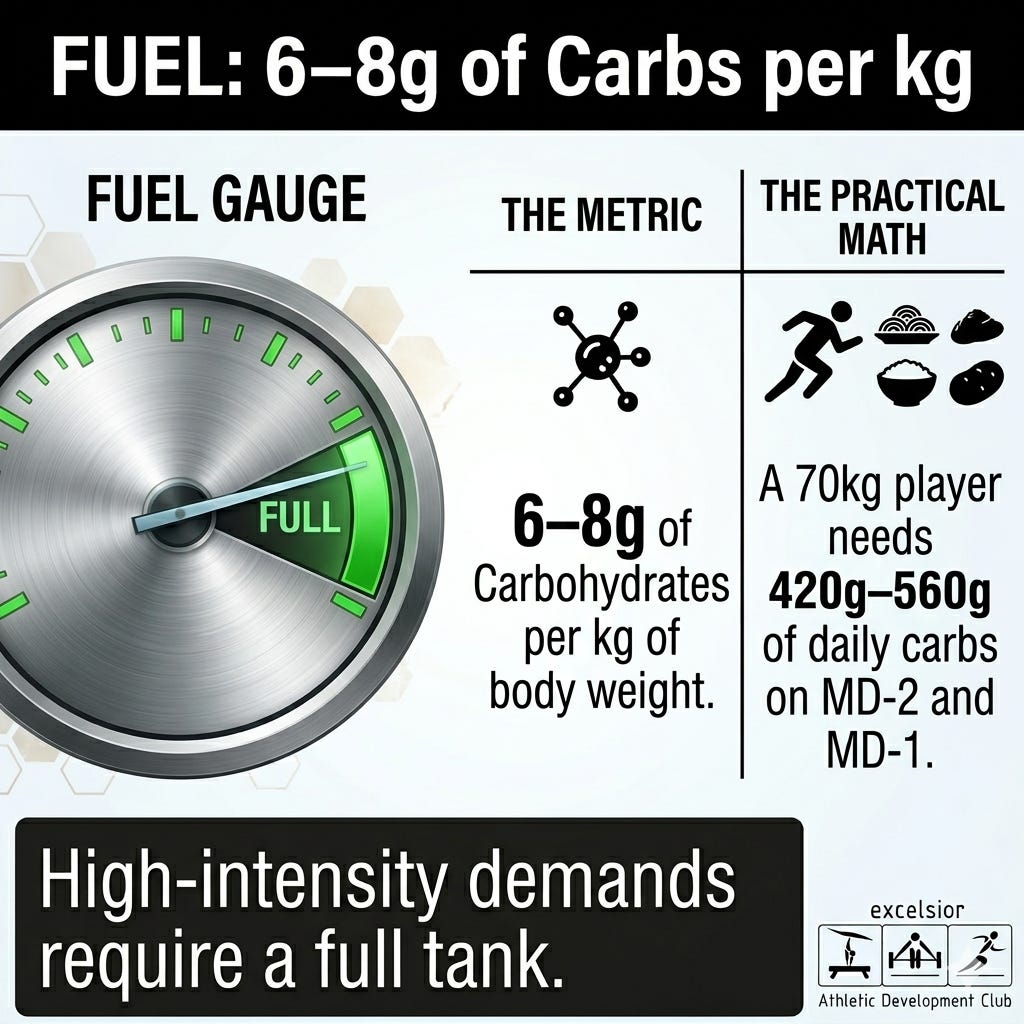
The Loading Phase (24–48 hours before high-intensity blocks): You need 6–8 g/kg of carbohydrates daily. For a 70kg player, that is 420–560g of carbs.
· Practical Food Targets:
· Breakfast: Large bowl of porridge, one large banana, and a glass of orange juice (~90g carbs).
· Lunch: 2 cups of white pasta with tomato sauce and 2 slices of white bread (~110g carbs).
· Snack: A fruit smoothie with 2 kiwis and oats (~70g carbs).
· Dinner: 2 cups of white rice with lean chicken (~120g carbs).
The Pre-Match “Protein Ceiling”: To avoid gastrointestinal discomfort and a “heavy” stomach in the heat, keep protein to less than 0.4 g/kg in your final meal.
· Target: Maximum 28g of protein.
· Practical Example: One small, palm-sized chicken breast (90–100g) or one medium fish fillet. Avoid large steaks or high-protein shakes (>30g) in this window.
Here’s a healthy, easy-to-make, protein cheescake recipe:
3. Bridging the Recovery Gap
Sleep is your most potent recovery tool, yet research shows a massive 1.3-hour “sleep gap” in football. While players report needing 8.3 hours of sleep to feel rested, they average only 7.0 hours, particularly after night sessions where adrenaline and cognitive arousal are high.
The Heat Strategy:
· The Cool-Down Cue: Take a warm shower before bed to trigger the body’s natural cooling response, which cues the brain for sleep onset.
· The Melatonin Meal: Include high-glycemic index (GI) carbohydrates (like white rice or sweet potato) in your evening meal. These facilitate quicker sleep onset by promoting the synthesis of serotonin and melatonin.
Summary: The “Heatwave” Checklist
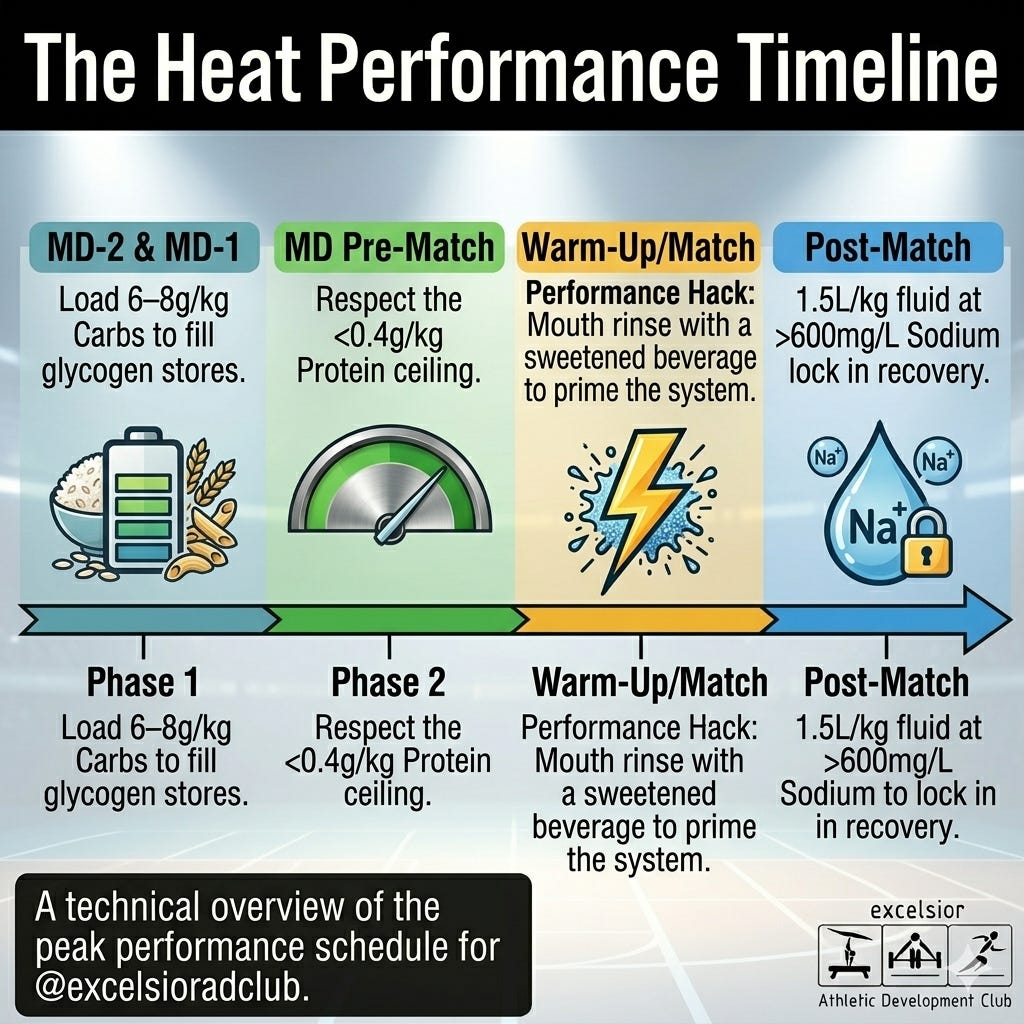
1st Sodium is Non-Negotiable: Use drinks with >600mg/L of sodium; water alone isn’t enough in 30°C+ heat.
2nd Hit the Carb Targets: 420g+ for a 70kg player to prevent glycogen depletion.
3rd Respect the Protein Limit: Keep the pre-match meal under 28g of protein to ensure fast gastric emptying.
4th Cool the Environment: Maintain a room temperature of ~17°C to fight the heat-induced sleep deficit.
Next Week in the World Cup Series: The Sprint Vaccine: Why running at >95% max speed is your best defence against hamstring injuries.
If this was useful, please forward it to your coaching staff.